


Modern life has perfected the art of keeping us slightly unwell. We sit too long, sleep too little, stare into luminous rectangles, and call a day spent answering emails “productive”. The body, meanwhile, keeps a quiet ledger. The shoulders rise. The breath shortens. The mind begins to resemble a browser with thirty-seven tabs open and no idea where the music is coming from.
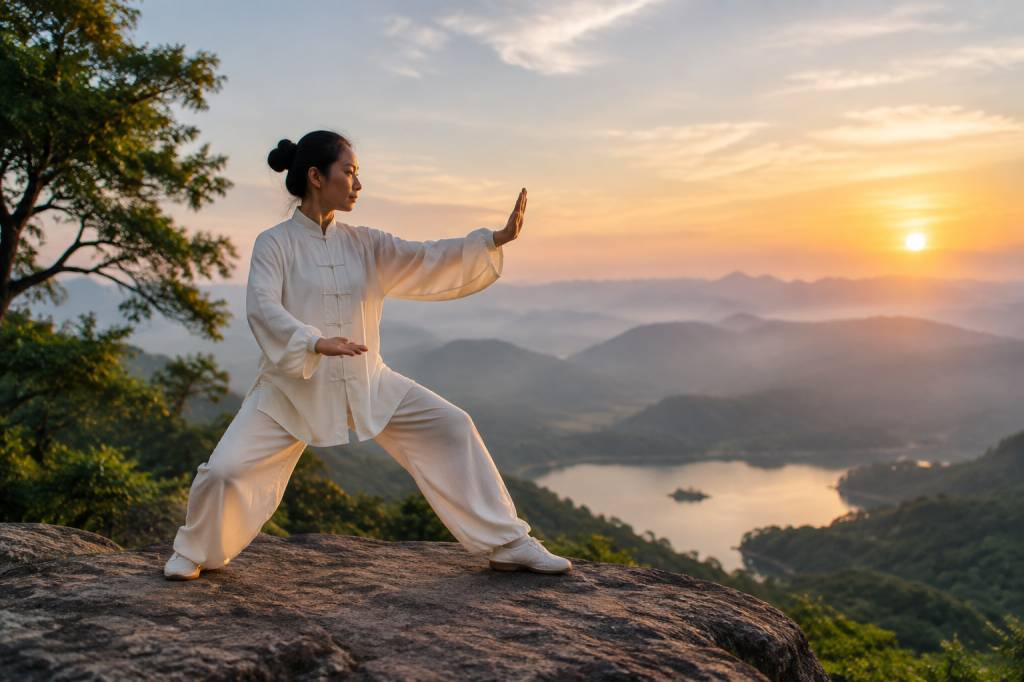
Tai chi offers a gentler alternative. Often described as meditation in motion, it is a traditional Chinese practice built around slow, continuous movements, controlled breathing, balance and focused attention. It requires no expensive equipment, no heroic levels of flexibility and, mercifully, no willingness to shout motivational slogans in a crowded gym.
Its movements may look deceptively simple. Yet beneath that calm surface lies a practice with potential benefits for cardiovascular health, mobility, mood, sleep and everyday resilience. Tai chi is not a miracle cure, and it should not replace professional medical care. But for many people, it can become a practical way to reconnect the mind and body—two old acquaintances too often separated by modern life.
Gentle movement with serious purpose
Tai chi developed from Chinese martial arts and is traditionally linked with the principles of qi, or vital energy. Contemporary research tends to focus less on invisible currents and more on measurable outcomes: balance, muscle function, stress levels, physical activity and quality of life.
There are several styles, including Yang, Chen, Wu and Sun. Some are more physically demanding than others, but most share a few essential features:
- Slow, flowing movements performed with control.
- Weight shifting from one leg to the other.
- Upright posture and relaxed joints.
- Deep, steady breathing.
- Attention directed towards bodily sensations and movement.
That combination makes tai chi accessible to a wide range of people, including older adults and those returning to exercise after illness or injury. As always, anyone with a health condition should seek appropriate medical advice and adapt the practice to their abilities.
Supports balance and reduces the risk of falls
Balance is not a glamorous subject until it abandons you on a wet pavement. Then it becomes suddenly philosophical: why are we here, and why is the ground moving?
Tai chi trains balance through repeated weight shifts, controlled turns, changes in stance and deliberate foot placement. These movements challenge the body’s proprioception—the ability to sense where it is in space. Over time, this may improve stability and confidence while walking, standing or navigating uneven surfaces.
Research has shown particularly promising results for older adults, who may face a higher risk of falls. Tai chi does not make anyone invincible, but it can help people become more attentive to posture, momentum and the relationship between their feet and the floor. That awareness often matters in the small, ordinary moments where accidents happen: stepping off a bus, reaching for a high shelf or turning too quickly in the kitchen.
Improves flexibility and joint mobility
Tai chi moves the body through a broad range of gentle positions without forcing it into extreme stretches. The hips rotate, the spine lengthens, the shoulders relax and the knees bend softly. This encourages mobility while respecting the body’s limits.
For people who spend much of the day seated, these movements can be a useful antidote to stiffness. The practice may help maintain flexibility in the ankles, knees, hips, shoulders and back. It can also make everyday tasks—climbing stairs, getting out of a chair or reaching behind you—feel less like negotiations with an indifferent machine.
The key is consistency rather than intensity. Tai chi is not a competition to see who can touch their toes first. Pain is not a badge of honour, and forcing a joint beyond its comfortable range defeats the purpose of a mindful practice.
Builds functional strength
Slow does not mean effortless. Holding a controlled stance requires the legs, hips and core muscles to work continuously. Repeatedly shifting weight and maintaining upright alignment can strengthen the muscles used for walking, standing and stabilising the body.
This is functional strength: the kind that supports real life rather than merely producing impressive numbers on a gym machine. Tai chi may be especially useful for people who dislike conventional resistance training or need a lower-impact option. It can also complement other forms of exercise, including walking, swimming and strength work.
Beginners may notice that their thighs become unexpectedly opinionated after a class. This is normal. Even the most tranquil movement has a way of reminding neglected muscles that they remain employed.
Encourages cardiovascular health
Tai chi is generally less intense than running or vigorous cycling, but it still involves continuous movement. Depending on the style and pace, it can raise the heart rate gently and contribute to overall physical activity.
Regular practice may support cardiovascular fitness, circulation and exercise tolerance, particularly among people who are inactive or unable to manage high-impact workouts. It can serve as a welcoming entry point for those who find conventional exercise intimidating.
It is worth keeping expectations realistic. Tai chi alone may not provide all the aerobic activity recommended for health. A balanced routine might combine it with brisk walking or another form of moderate exercise. Think of tai chi as one instrument in the orchestra, not the entire orchestra arriving late and demanding applause.
Helps reduce stress
Stress is not merely an idea in the mind. It can tighten muscles, disturb digestion, raise heart rate and keep the nervous system permanently poised for an emergency that may turn out to be an unread message.
Tai chi addresses stress through a combination of slow movement, breathing and concentration. The practice encourages the body to move away from a constant fight-or-flight state and towards a calmer mode of attention. By focusing on the rhythm of a movement, practitioners may find that racing thoughts lose some of their authority.
This does not mean tai chi erases difficult circumstances. The landlord will not become more reasonable because you have completed a graceful “cloud hands” sequence. But the practice may create a pause between a stressful event and your response to it. That pause can be surprisingly powerful.
Supports emotional wellbeing
Mental wellbeing is shaped by many factors, including relationships, financial security, physical health and access to professional support. Tai chi cannot solve structural problems with a deep breath and a soft knee bend. Still, it may offer a useful contribution to emotional health.
Studies have associated tai chi with improvements in mood, anxiety and psychological wellbeing. The reasons are likely both physical and social. Movement can influence mood, focused breathing can quiet mental agitation, and attending a class can reduce isolation. For some people, the ritual of showing up is as important as the movements themselves.
There is also something reassuring about practising without the demand to perform. Tai chi invites attention rather than perfection. A trembling stance, a forgotten sequence or an uncooperative hip is not a moral failure. It is simply information from the body.
May improve sleep quality
Sleep is often treated as a luxury, despite being one of the body’s most basic maintenance systems. When the mind remains alert late into the night, even an expensive mattress can begin to feel like an accusation.
Gentle tai chi may help support better sleep by reducing stress, easing muscle tension and encouraging a calmer evening rhythm. Some research suggests that regular practice can improve sleep quality and reduce problems such as difficulty falling asleep or waking frequently during the night.
An evening session does not need to be long. Ten to twenty minutes of slow movement and relaxed breathing may provide a useful transition between the demands of the day and the quieter territory of sleep. It is not a guaranteed sedative, but it is less likely than scrolling through alarming headlines until midnight to agitate the nervous system.
Can help manage chronic pain
People living with conditions such as arthritis, persistent back pain or fibromyalgia often face a cruel dilemma: movement may help, but too much movement may hurt. Tai chi offers a low-impact approach that can be adapted to different levels of ability.
Its slow pace and emphasis on relaxed alignment may reduce unnecessary strain while keeping the body active. Research has found potential benefits for pain, stiffness and physical function in some people with osteoarthritis and other chronic conditions.
The right approach is cautious and individual. Movements can often be performed seated or with a smaller range of motion. A qualified instructor familiar with health limitations can help, while a clinician should be consulted when pain is severe, unexplained or worsening. “No pain, no gain” is a slogan best left in the abandoned gym of bad advice.
Sharpens attention and body awareness
Tai chi asks practitioners to notice details: where the weight rests, how the spine is aligned, whether the shoulders are tense and how the breath moves. This develops interoception and body awareness—the ability to recognise internal sensations before they become louder problems.
That awareness can influence daily habits. You may notice that you clench your jaw during emails, hold your breath in traffic or lean to one side while standing. Such discoveries are modest but meaningful. The body often sends warnings in whispers before it resorts to shouting.
Focused movement may also support concentration. Following a sequence requires memory, timing and sustained attention. In a culture built around interruption, practising one thing at a time becomes almost a small act of rebellion.
Supports brain health as we age
Tai chi combines physical coordination, memory, balance and social engagement. These elements may be valuable for maintaining cognitive function as we grow older. Learning and repeating sequences challenges the brain to plan movements, adapt to changes and remember patterns.
Some studies have linked tai chi with improvements in executive function, attention and cognitive performance, although research findings vary and more evidence is needed. It would be extravagant to promise that tai chi can outwit every form of cognitive decline. It may, however, provide a safe and enjoyable form of mental and physical stimulation.
The social dimension matters too. A regular class can create routine, connection and a sense of belonging—protective factors for wellbeing that no supplement can convincingly imitate.
Creates a sustainable exercise habit
Perhaps tai chi’s most practical benefit is that people are often willing to keep doing it. The best exercise programme is not necessarily the most punishing one; it is the one that fits into a person’s life and survives contact with a rainy Tuesday.
Tai chi can be practised indoors or outdoors, alone or in a group, standing or seated, for ten minutes or an hour. It requires little space and no elaborate kit. Comfortable clothing and supportive shoes are usually enough.
To begin, look for a qualified instructor, a community class or a reputable online programme. Start slowly, practise consistently and avoid movements that cause sharp pain, dizziness or unusual breathlessness. Even a short routine several times a week can establish momentum.
Tai chi will not make the world less chaotic. It will not persuade every politician to develop a conscience or convince your inbox to stop reproducing overnight. What it can do is offer a disciplined form of calm: a way to strengthen the body, settle the mind and pay attention to the fragile miracle of being here.
In the end, its promise is neither dramatic nor mystical. It is found in the ordinary: a steadier step, a deeper breath, a looser shoulder, a night of better sleep. Small changes, repeated patiently, have a habit of becoming a life.