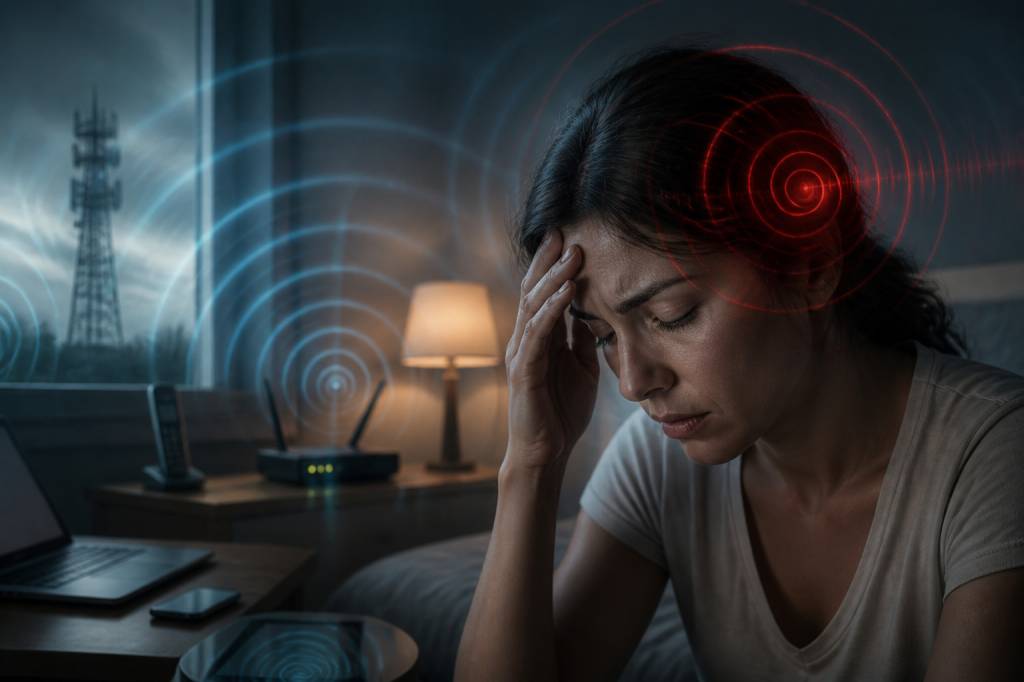
Electromagnetic waves are everywhere: in sunlight, radio broadcasts, Wi-Fi signals, mobile phones, medical scanners and the warm glow of a radiator. Modern life is, in part, an invisible ocean of energy. We swim through it before breakfast, often while checking a device that is itself adding another ripple to the tide.
That sounds ominous. It is also more complicated than most alarming headlines suggest.
Electromagnetic radiation ranges from low-energy radio waves to highly energetic gamma rays. The key scientific distinction is whether the radiation is ionising—powerful enough to damage atoms and DNA directly—or non-ionising, which generally cannot break chemical bonds in the same way. X-rays and gamma rays are ionising. Radio waves, microwaves, infrared radiation and visible light are non-ionising, although intense exposure can still cause harm.
So what are the genuine risks? And where does the evidence become less solid than the internet’s most confident claims? Here are ten harmful effects associated with electromagnetic waves, ranked not by panic but by what science actually tells us.
DNA damage from ionising radiation
The clearest danger comes from ionising radiation. X-rays, gamma rays and some forms of ultraviolet radiation carry enough energy to alter molecules inside cells. When DNA is damaged, the cell may repair itself, die, or—less commonly but significantly—begin multiplying abnormally.
That is why exposure to ionising radiation is associated with an increased risk of cancer. The risk depends on the dose, the duration of exposure, the type of radiation and the tissues involved. A single dental X-ray is a very small exposure, while repeated high-dose exposure is a different matter entirely.
Radiation is not a moral category. It is a question of dose. Even sunlight, essential to life and mood, contains ultraviolet radiation capable of damaging skin-cell DNA. Nature, as ever, offers no guarantees and charges by the hour.
Skin ageing and skin cancer from ultraviolet light
Ultraviolet, or UV, radiation from the Sun is the most familiar everyday electromagnetic hazard. UVA penetrates more deeply into the skin and contributes to premature ageing, wrinkles and loss of elasticity. UVB is more strongly associated with sunburn and direct DNA damage, although both forms can contribute to skin cancer.
Long-term exposure increases the risk of basal cell carcinoma, squamous cell carcinoma and melanoma. Sunburn during childhood is particularly concerning because damage accumulates over a lifetime.
Protection is straightforward, though human beings have historically treated straightforward advice as a personal insult:
- Use broad-spectrum sunscreen with an appropriate SPF.
- Wear a hat, sunglasses and tightly woven clothing in strong sunlight.
- Seek shade around midday, when UV levels are often highest.
- Never assume clouds provide complete protection.
- Avoid tanning beds, which expose the skin to concentrated UV radiation.
Sunlight is not the enemy. Unprotected excess is.
Eye damage caused by ultraviolet and intense visible light
The eyes are particularly vulnerable because they allow light to enter directly. Repeated UV exposure can contribute to cataracts, damage to the cornea and, over time, certain forms of retinal disease. Snow blindness—also called photokeratitis—can occur when intense UV light reflects from snow, ice, sand or water.
Very bright visible light can also injure the retina. Looking directly at the Sun, even briefly, can cause permanent damage. The same principle applies to lasers and some industrial light sources. A laser pointer is not a toy simply because it fits in a pocket; physics has never been impressed by pocket size.
UV-protective sunglasses and sensible behaviour are effective safeguards. When buying sunglasses, look for reliable protection against both UVA and UVB rather than judging quality by how dramatically dark the lenses appear.
Thermal burns from powerful radio waves and microwaves
Non-ionising radiation usually lacks the energy to damage DNA directly. However, sufficiently powerful radio-frequency and microwave radiation can heat body tissue. This is the operating principle behind microwave ovens—and also the reason industrial, medical and telecommunications equipment must meet strict exposure limits.
At very high intensities, heating can cause burns, eye injuries and other tissue damage. The eyes are especially sensitive because they have limited blood flow and cannot dissipate heat efficiently. Occupational exposure near radar systems, broadcasting equipment or industrial RF machinery therefore requires careful controls.
Everyday exposure from compliant mobile phones, Wi-Fi routers and household appliances is dramatically lower than the levels needed to produce dangerous heating. Regulation focuses largely on preventing excessive local or whole-body temperature increases, measured through standards such as specific absorption rate, or SAR.
Heat stress from infrared radiation
Infrared radiation is emitted by warm objects, including fires, heaters, sunlight and the human body. It is non-ionising, but intense infrared exposure can heat the skin and deeper tissues. Workers near furnaces, foundries, glass manufacturing plants and powerful lamps may face risks of burns, dehydration and heat stress.
The danger here is often misunderstood because “radiation” sounds exotic. Infrared heat is not mysterious; it is the warmth you feel standing near a fire. The same physical process becomes hazardous when exposure is intense, prolonged or combined with high environmental temperatures.
Protective clothing, shielding, ventilation, hydration and scheduled breaks can reduce occupational risk. A cool drink will not defeat a furnace, but it remains a respectable ally.
Sleep disruption and circadian rhythm effects
Not all electromagnetic effects arrive through heating or DNA damage. Visible light—particularly blue-enriched light from screens and bright LED lighting—can influence the body’s circadian rhythm. Evening exposure may suppress melatonin, a hormone involved in preparing the body for sleep.
Research suggests that bright screens and indoor lighting late at night can delay sleep timing or make it harder to fall asleep, especially when people use devices close to the face. The effect varies between individuals and depends on brightness, duration, distance and personal sleep patterns.
The screen itself is not a tiny nocturnal villain plotting against your dreams. The larger problem is often a combination of light, stimulating content, notifications and the human refusal to stop scrolling when tomorrow begins in six hours.
Useful measures include dimming lights in the evening, enabling night-mode settings, keeping phones away from the bed and maintaining regular sleep times. For persistent insomnia, the solution should not be reduced to screen settings alone; stress, medication, caffeine and medical conditions may also be involved.
Headaches, eye strain and discomfort
People sometimes report headaches, dizziness, eye strain or nausea when using screens, working under artificial lighting or spending time near electronic equipment. These symptoms are real, even when the explanation is not necessarily electromagnetic radiation itself.
Digital eye strain is commonly linked to prolonged near-focus, reduced blinking, glare, poor posture, uncorrected vision and inadequate breaks. Flicker from certain lights or displays can also bother some people. In susceptible individuals, flickering or rapidly changing visual patterns may trigger migraines or, more rarely, seizures.
Improving lighting, adjusting screen brightness, increasing text size, taking regular distance breaks and checking eyesight can help. A useful rule is to look into the distance periodically rather than allowing the eyes to remain fixed on a glowing rectangle as if awaiting divine instructions.
Interference with implanted medical devices
Electromagnetic fields can interfere with some electronic medical devices, including pacemakers, implantable cardioverter-defibrillators and insulin pumps. Modern devices are designed with shielding and tested against many everyday sources, so serious interference is uncommon. It is not, however, impossible.
Strong magnets and powerful electromagnetic fields are the main concern. Magnetic resonance imaging, or MRI, requires specific precautions because its magnetic fields are extraordinarily powerful. Some industrial equipment, magnetic security systems and specialised tools may also require attention.
People with implanted devices should follow the advice provided by their cardiologist or device manufacturer. In general, keep mobile phones and magnetic accessories a sensible distance from implanted cardiac devices, and do not place a phone directly over the implant. If a device vibrates, alarms or behaves unusually, move away from the suspected source and seek medical advice.
Possible effects on fertility and reproductive health
Questions about electromagnetic waves and fertility have generated a large and uneven body of research. Some studies have reported changes in sperm motility, sperm quality or reproductive outcomes associated with mobile-phone use or radio-frequency exposure. Other studies have found no meaningful effect, and laboratory findings do not always translate into real-world human harm.
One reason for concern is heat. Prolonged warming of the testes can reduce sperm production, regardless of whether the heat comes from a laptop, hot environment or another source. Some research has also explored non-thermal biological effects, but the evidence remains inconsistent and mechanisms are not firmly established.
For people trying to conceive, low-cost precautions are reasonable: avoid prolonged heat, do not keep a hot laptop directly on the lap for extended periods, and follow medical advice about fertility. But it would be scientifically misleading to claim that ordinary Wi-Fi or mobile-phone exposure has been proven to cause infertility.
Possible links with cancer: what remains uncertain
Radio-frequency electromagnetic fields from mobile phones have been studied extensively because phones are used close to the head and body. The International Agency for Research on Cancer classified radio-frequency fields as “possibly carcinogenic to humans” in 2011. This category means that a potential association could not be ruled out; it does not mean that mobile phones are proven to cause cancer.
Since then, large studies have produced mixed findings. Some have suggested a small association with certain brain tumours, while others have found no clear increase in risk. Exposure patterns have also changed as mobile networks evolved, and people now use phones in different ways.
For those who prefer to reduce exposure without abandoning modern life, simple steps include using speaker mode or headphones, avoiding lengthy calls when the signal is weak, and carrying the phone away from the body when practical. These are precautionary habits, not admissions that the phone is a carcinogenic talisman.
Neurological and behavioural concerns still under investigation
Researchers continue to examine whether electromagnetic fields influence memory, attention, mood or other neurological functions. Laboratory experiments have sometimes reported subtle changes in brain activity, but results have been difficult to reproduce consistently. A measurable biological response is not automatically a health hazard; the crucial question is whether it produces lasting harm.
There is also a psychological dimension. Anxiety about invisible exposures can generate genuine symptoms, including headaches, palpitations and sleep problems. This does not mean people are imagining their distress. It means the nervous system responds to fear as well as to physical stimuli.
The most reliable approach is neither blind reassurance nor technological superstition. Use established safety guidance, reduce intense and unnecessary exposures, and consult a healthcare professional when symptoms persist. Science is not a machine for manufacturing certainty. It is a method for separating what we know from what we merely suspect.
How to reduce unnecessary exposure
For most people, the greatest proven electromagnetic risks come from ultraviolet light, medical or occupational ionising radiation, intense heat sources and unsafe lasers—not from ordinary Wi-Fi routers quietly blinking in the corner.
- Protect your skin and eyes from excessive sunlight.
- Follow medical guidance during X-rays, CT scans and other procedures.
- Use shielding and protective equipment in high-exposure workplaces.
- Keep intense heat and industrial RF equipment at a safe distance.
- Reduce bright light and screen use before bedtime.
- Follow manufacturer guidance if you use an implanted medical device.
- Use speaker mode or headphones for long mobile-phone calls if that makes you more comfortable.
- Do not rely on unverified “radiation protection” stickers, pendants or miracle fabrics.
Electromagnetic waves are not one single threat but an enormous family of phenomena, from the warmth on your face to the radiation used to peer inside the human body. Some can damage tissue. Some can disrupt sleep. Some risks are well established; others remain under careful investigation.
The sensible position lives between denial and dread. Ask what kind of radiation is involved, how strong the exposure is, how long it lasts and what the best available evidence actually shows. In a world crowded with invisible forces, those questions are a modest form of self-defence—and perhaps the closest thing we have to a reliable compass.