


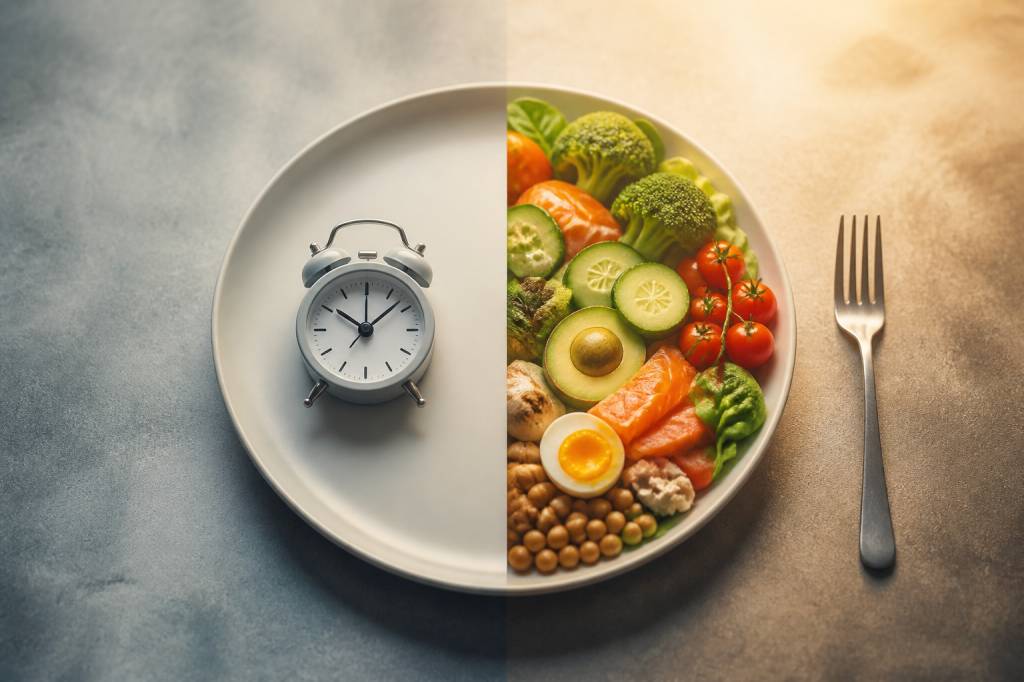
There is a peculiar modern ritual in which people stare at the clock, negotiate with their stomach, and call it metabolic health. Intermittent fasting has become one of the most discussed eating patterns of the decade, promising simplicity in a nutritional world crowded with rules.
The 14:10 method is among the gentler versions. It involves fasting for 14 hours and eating during a 10-hour window each day. No forbidden food list. No ceremonial weighing of almonds. No requirement to pretend that black coffee is a personality. But does this rhythm genuinely improve health, or is it simply another diet trend wearing the respectable coat of science?
The short answer is nuanced: 14:10 fasting may help some people regulate calorie intake, lose a modest amount of weight and establish a more consistent daily routine. Yet the evidence does not suggest that the fasting window possesses magical properties independent of what, when and how much a person eats.
What does 14:10 fasting mean?
The principle is straightforward. You choose a 10-hour period during which you eat, then fast for the remaining 14 hours. Water and other calorie-free drinks are generally allowed during the fasting period.
For example:
- Breakfast at 8 a.m. and the final meal by 6 p.m.
- Breakfast at 9 a.m. and dinner finished by 7 p.m.
- The first meal at 10 a.m. and the last meal by 8 p.m.
The fasting period includes sleep, which is one reason the approach can feel more manageable than longer fasting schedules. Someone who finishes dinner at 7 p.m. and eats breakfast at 9 a.m. has already completed 14 hours by morning, most of them unconscious and therefore spared the full drama of personal sacrifice.
During the fasting window, people usually consume water, sparkling water, unsweetened tea or black coffee. Drinks containing sugar, milk, cream or significant calories technically interrupt the fast. Whether a small dash of milk makes a meaningful difference in real life is a more complicated question, but the basic rule remains useful: the fewer calories consumed, the more closely the routine follows the intended pattern.
How might the pattern affect the body?
After eating, the body uses and stores energy from food, with insulin helping glucose move from the bloodstream into cells. As time passes after a meal, insulin levels generally decline and the body begins relying more on stored energy. This shift is often described as moving from the “fed” state towards the “fasted” state.
A 14-hour fast may extend the time spent with lower insulin levels compared with a typical pattern of eating from early morning until late at night. It may also reduce the number of opportunities to snack. That second point is less glamorous, but probably more important than many headlines admit.
If someone previously ate breakfast, lunch, dinner, evening snacks and several small offerings from the office biscuit tin, a 10-hour eating window may naturally reduce total calorie intake. Weight loss then results primarily from an energy deficit, not from an alchemical transformation triggered at precisely hour fourteen.
Fasting may also interact with the body’s circadian rhythm, the internal clock that helps regulate sleep, hormones, temperature and metabolism. Eating earlier in the day may align more closely with this rhythm than consuming a large meal late at night. Human biology, inconveniently, is not entirely indifferent to the clock.
What does the research actually say?
Research into time-restricted eating is growing, but it remains more modest than the confident claims surrounding it. Studies have examined different fasting windows, participant groups and outcomes, making direct comparisons difficult.
For weight management, time-restricted eating can produce modest weight loss, particularly when it helps people consume fewer calories. Several trials suggest that its benefits are broadly comparable to those of conventional calorie restriction. In other words, it may work well because it is simple enough to follow, not because it bypasses the basic laws of energy balance.
Some studies have reported improvements in blood sugar control, insulin sensitivity, blood pressure or cholesterol levels. These changes may be linked to weight loss, improved meal timing, reduced late-night eating or a combination of all three. Evidence for major improvements in long-term health outcomes, however, is still limited.
A 2022 review published in the New England Journal of Medicine described time-restricted eating as a promising approach but noted that longer and larger clinical trials are needed. More recent research has continued to suggest that earlier eating windows may be metabolically preferable to late-night schedules, although the ideal timing remains uncertain.
The 14:10 pattern itself has received less attention than 16:8 fasting, in which people eat within an eight-hour window. That does not mean 14:10 is ineffective. It means the scientific spotlight has often been pointed elsewhere, usually towards the more dramatic claim. Science, like journalism, has its fondness for a sharper headline.
Potential benefits of a 14-hour fast
For some adults, a 14:10 schedule may offer practical advantages:
- Weight management: A defined eating window can reduce grazing and make calorie intake easier to monitor.
- Fewer late-night snacks: Ending food intake earlier may reduce consumption of highly processed, calorie-dense foods eaten out of habit rather than hunger.
- A clearer routine: Regular meal times can make planning, shopping and cooking less chaotic.
- Possible metabolic improvements: Some people may see changes in fasting glucose, insulin sensitivity or blood pressure, particularly if they also lose weight.
- Better awareness of hunger: A structured pattern can help distinguish physical hunger from boredom, stress or the mysterious gravitational pull of the kitchen.
There may also be psychological benefits when the plan feels less restrictive than a traditional diet. People are not asked to classify food as morally pure or wicked. They are simply asked to make time a little more visible.
What it does not guarantee
Fasting is not a nutritional eraser. A ten-hour eating window does not automatically make a diet balanced, and it cannot neutralise a daily diet dominated by ultra-processed foods, sugary drinks and insufficient protein or fibre.
It is entirely possible to consume more calories than needed during the eating window. A large late breakfast, an oversized lunch and a triumphant evening feast can fit neatly inside ten hours. The clock may be satisfied; the metabolism less so.
Nor is fasting a guaranteed cure for inflammation, diabetes, ageing or every other condition currently orbiting the wellness industry. Claims about “detoxification” should be treated with suspicion. The liver, kidneys, lungs and digestive system already perform the body’s principal detoxification work. They do not require a branded fasting protocol and a motivational quote printed over a photograph of a lemon.
How to begin safely
A gradual approach is usually more sustainable than a sudden change. Start by identifying your current eating pattern and consider where unnecessary calories appear. If dinner regularly ends at 10 p.m. and breakfast begins at 7 a.m., simply moving dinner earlier may create a 10- or 12-hour overnight fast without much disruption.
To try 14:10 fasting:
- Choose a consistent 10-hour eating window that fits your work, family and sleep schedule.
- Whenever practical, finish the last meal two or three hours before bedtime.
- Prioritise minimally processed foods, vegetables, fruit, legumes, whole grains, nuts, dairy or fortified alternatives, and suitable sources of protein.
- Drink enough water throughout the day.
- Avoid treating the eating window as permission to compensate with large quantities of highly processed food.
- Track energy, mood, sleep, hunger and exercise performance for a few weeks.
An earlier window, such as 8 a.m. to 6 p.m., may be preferable to 11 a.m. to 9 p.m. for some people. Yet the best schedule is the one that can be maintained without turning everyday life into a negotiation with a stopwatch. If a plan regularly causes exhaustion, irritability or social isolation, it may be biologically elegant and practically useless.
Exercise, caffeine and medication
Light or moderate exercise is generally compatible with a 14:10 schedule. Some people train comfortably before their first meal, while others experience dizziness, weakness or reduced performance. There is no medal for exercising hungry. If symptoms appear, eat beforehand or adjust the timing.
Black coffee and unsweetened tea are commonly included during the fasting period. Caffeine, however, can worsen anxiety, palpitations or sleep problems, especially when used to silence hunger. If the morning drink becomes several strong coffees and an afternoon tremor, the experiment has perhaps acquired the wrong kind of momentum.
People taking medication should consider timing carefully. Some medicines need to be taken with food, while others may affect blood sugar or blood pressure. A fasting routine should never be used to alter prescribed treatment without professional advice.
Who should be cautious?
Intermittent fasting is not suitable for everyone. Medical advice is particularly important for people with diabetes, especially those using insulin or medicines that can cause low blood sugar. Fasting may also be inappropriate for people with a history of eating disorders, since rigid food rules can reactivate harmful behaviours.
People who are pregnant or breastfeeding generally have different nutritional needs and should not begin a fasting regimen without guidance from a qualified healthcare professional. The same applies to children and teenagers, older adults at risk of malnutrition, and individuals who are underweight or recovering from illness or surgery.
Caution is also sensible for people with chronic kidney disease, significant liver disease, uncontrolled blood pressure, recurrent low blood sugar or conditions requiring regular meals. Anyone who experiences fainting, confusion, persistent headaches, heart palpitations or severe weakness should stop and seek medical advice.
The social reality of the clock
Food is not only fuel. It is also birthday cake, a conversation after work, a family tradition and the quiet language of hospitality. A fasting schedule that makes every shared meal feel like a violation may carry a cost that does not appear in a blood test.
Flexibility matters. A 14:10 pattern does not need to be perfect seven days a week to be useful. Someone might follow it on working days and adapt at weekends. Another person may choose an earlier dinner most days but relax the schedule during holidays. Health is not improved by converting meals into a moral tribunal.
The most useful question is not “Can I endure 14 hours without eating?” It is “Does this routine help me eat well, sleep adequately, maintain energy and live normally?” If the answer is yes, the approach may be worth exploring. If the answer is no, another pattern may serve better.
A measured verdict
14:10 fasting is a reasonable, relatively gentle form of time-restricted eating. It may support weight management, reduce late-night eating and improve daily structure. Some people may experience better blood sugar control or other metabolic benefits, particularly when the eating window encourages earlier meals and a higher-quality diet.
But the available science does not show that the 14-hour fast is uniquely powerful. Its success is likely to depend on adherence, food quality, total energy intake, sleep, physical activity and individual health. The method is neither miracle nor menace. It is a scheduling tool.
Used thoughtfully, it can create a little order in the unruly landscape of modern eating. Used rigidly, it becomes another demand placed upon a body already carrying enough. The clock can be useful, but it should remain a servant of health—not its sternest landlord.