
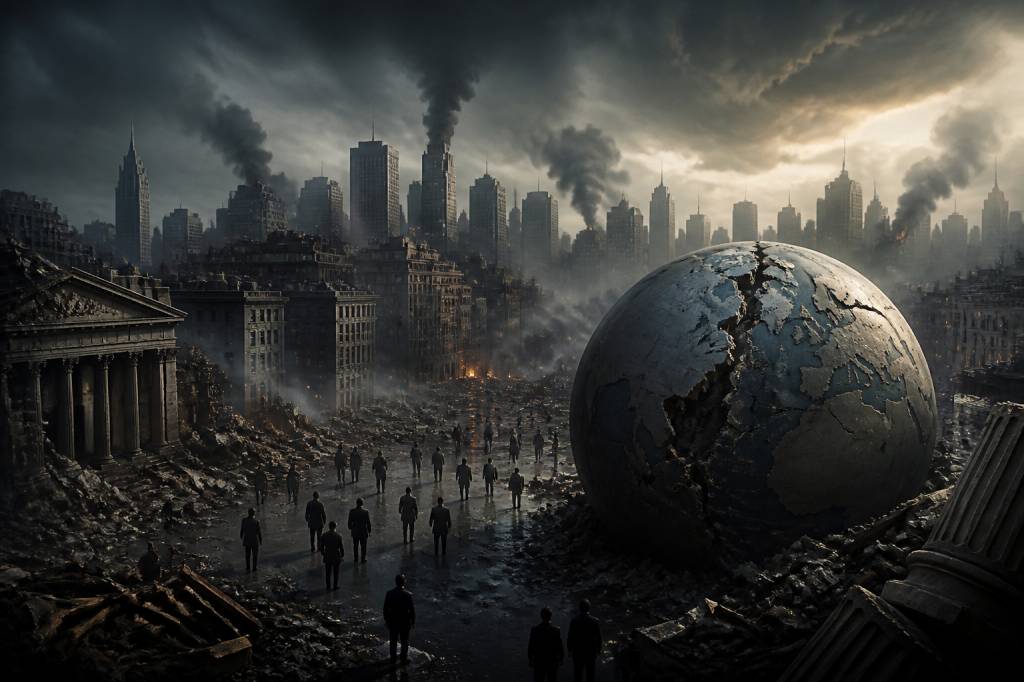
The 2008 financial crisis did not arrive with the thunderclap of a war or the neat symbolism of a single political event. It came like a slow structural failure: first a crack, then a wobble, then the whole building politely pretending it was fine while the foundations gave way. By the time the world noticed the smell of smoke, the fire had already spread through banks, housing markets, pensions, and public confidence.
For anyone trying to understand why the crisis still matters, the answer is simple: it changed the logic of modern capitalism. It reshaped regulation, exposed the fragility of global finance, and taught a painful lesson in the dangerous romance between easy credit and human optimism. Or, to put it less elegantly: if money is a story, 2008 was the chapter where everyone discovered the narrator had been improvising.
The fragile boom before the collapse
To understand the crisis, you have to begin with the illusion before the wreckage. In the years leading up to 2008, the US housing market was booming. Home prices climbed, mortgages multiplied, and banks behaved as though risk had been politely abolished. Lending standards loosened. Loans were given to borrowers with shaky credit histories, often with low introductory interest rates that would later reset upward. These were the infamous subprime mortgages, the financial equivalent of handing out umbrellas in a hurricane and calling it weatherproofing.
The key problem was not just that bad loans were made. It was that those loans were packaged, sliced, repackaged, and sold across the global financial system as if they were something solid and respectable. Mortgage-backed securities and collateralized debt obligations spread the risk so widely that many institutions no longer knew exactly what they held. In theory, diversification should reduce danger. In practice, it meant that a toxic asset could be hiding everywhere, like mold in the walls of a luxury apartment.
Wall Street loved the arrangement. Rating agencies often stamped these complex products with high grades. Investors loved the yield. Borrowers loved the dream of home ownership. Everyone, for a while, loved the music. And that is often how financial disasters begin: with too much confidence and too little memory.
The timeline that brought the system down
The crisis unfolded in stages, and each stage made the next one possible. The timeline matters because it shows how a local problem became a global shock. One bad bet did not destroy the economy. A chain reaction did.
- 2006: US housing prices begin to fall after years of rapid growth. Mortgage defaults rise, especially among subprime borrowers.
- Early 2007: Lenders tied to subprime mortgages start collapsing. The cracks are visible, but the broader financial system still assumes the damage will remain contained.
- June 2007: Bear Stearns shuts two hedge funds exposed to mortgage-related assets. The warning lights are now flashing, though many investors keep driving.
- August 2007: Credit markets freeze in parts of the world. Central banks intervene, signaling that this is no ordinary market hiccup.
- March 2008: Bear Stearns is rescued by JPMorgan Chase with Federal Reserve support. A venerable institution is saved, but the symbolism is grim: the authorities have entered the stage, and not for applause.
- September 2008: Lehman Brothers files for bankruptcy on September 15, becoming the defining collapse of the crisis.
- September 2008: AIG is bailed out days later, after massive losses on credit default swaps threaten to cascade through the financial system.
- Late 2008: Governments launch emergency rescue packages, bank recapitalizations, and unprecedented monetary interventions.
- 2009 onward: The recession deepens, unemployment rises, and the recovery begins slowly, unevenly, and with all the charm of medical paperwork.
Why Lehman Brothers became the symbol of failure
Lehman Brothers is the name most people remember because its collapse made the crisis impossible to ignore. When the bank filed for bankruptcy in September 2008, markets did not merely twitch. They convulsed. Trust, that most invisible and essential ingredient in finance, evaporated almost overnight. Banks stopped lending to one another. Money market funds came under pressure. Firms that had relied on short-term funding suddenly found themselves stranded on the shore, staring at the sea they had just crossed.
Why did Lehman matter so much? Because it was a signal. If a major investment bank could fail, then no institution was automatically safe. The idea that the government would always step in had been shattered, at least temporarily. That shock ripped through markets worldwide. Traders scrambled. Asset prices plunged. The phrase “systemic risk” moved from academic journals to front-page headlines, where it belongs whenever a crisis is busy rewriting the rules.
There was also an almost theatrical cruelty to the timing. Lehman’s failure came after months of warnings, partial rescues, and mounting anxiety. It was not the first crack in the dam, but it was the point where many realized the water was no longer metaphorical.
The market impact: panic, freeze, and fire sale
The immediate market impact of the crisis was brutal. Equity markets fell sharply as investors fled risky assets. Banks saw their shares collapse, reflecting fears about solvency and hidden losses. Credit markets, usually the plumbing of the financial world, clogged up. And when plumbing fails, the whole house suffers.
Companies that needed short-term financing found it harder to borrow. Consumers faced tighter credit conditions. Mortgage lending weakened. Businesses delayed investment and hiring. The crisis did not stay neatly inside the banking sector; it spread into the real economy through a thousand small cuts.
Here is what happened in practical terms:
- Banks hoarded cash rather than lending it.
- Asset prices fell as investors sold at any price to raise liquidity.
- Interbank lending rates soared, showing how badly trust had broken down.
- Stock indices across major economies entered deep bear markets.
- Industrial output, trade, and consumer spending all weakened in the following months.
The freezing of credit was especially important. Modern economies depend on borrowing not as an emergency tool, but as routine circulation. When that circulation stops, even healthy businesses can be pulled into the undertow. A profitable firm with no access to short-term credit can behave, for a few terrible weeks, like a patient in cardiac arrest.
The human cost behind the numbers
Financial crises are often narrated with charts, ratios, and acronyms. Useful tools, yes. Also a perfect way to forget that the real story is human. The 2008 crisis destroyed jobs, homes, savings, and in some cases entire life plans. Unemployment surged in the United States and Europe. Foreclosures rose. Retirement accounts shrank. Families who had been told that home ownership was a sure path to stability discovered, with bitter irony, that the floor could fall through them too.
The social damage extended far beyond the most visible losses. Young people entering the labor market faced weaker prospects for years. Wage growth stalled. Public services came under pressure as governments dealt with falling tax revenues and rising rescue costs. The emotional aftertaste of the crisis lingered long after markets had stopped screaming.
There was also a psychological shift. Many citizens lost trust not only in banks, but in the experts, institutions, and political systems that had failed to warn them. In that sense, 2008 was not just a financial crisis. It was a legitimacy crisis. And those are harder to repair, because balance sheets can be recapitalized while public faith tends to return only reluctantly, if at all.
Government and central bank responses
Faced with the possibility of a full-scale collapse, governments and central banks intervened on a massive scale. The United States launched emergency support programs for banks, insurers, and other financial institutions. The Federal Reserve cut interest rates and introduced extraordinary liquidity measures. In Europe, governments coordinated rescues and guarantees, while central banks injected cash into strained markets.
The rationale was simple: prevent the collapse of the system itself. The debate, of course, was not simple at all. Critics argued that bailouts rewarded reckless behavior and socialized private losses. Supporters countered that allowing large institutions to fail in a disorderly way would have produced even worse damage. Both arguments have merit. That is the annoying thing about history: it rarely offers a tidy moral with the receipt attached.
One important consequence of the response was the expansion of central bank power. Quantitative easing, once a term that sounded like an obscure academic dare, became part of mainstream crisis management. Governments also introduced reforms to improve bank capitalization and reduce the chances of another catastrophic failure. Whether these reforms were sufficient remains a live question, and the answer depends partly on how much faith one places in financial institutions to remember what they would prefer to forget.
What the crisis changed in markets and policy
The 2008 crisis changed the way markets are viewed and regulated. Before the crash, many believed that sophisticated financial engineering had made the system safer by dispersing risk. After the crash, the same tools looked less like innovation and more like a very expensive confidence trick.
Some of the major changes included:
- Stricter capital requirements for banks
- Greater scrutiny of derivatives and shadow banking
- More attention to stress testing and liquidity risk
- Increased regulation of mortgage lending standards
- Deeper focus on systemic rather than just institution-specific risk
Investors also became more cautious, at least for a while. Risk premiums widened. The appetite for complex products cooled. Regulators and economists began paying closer attention to leverage, interconnectedness, and the speed at which panic can spread. A lesson had been paid for dearly, and the tuition was written in lost wealth and public anger.
Why it still matters today
The 2008 financial crisis remains relevant because the conditions that produced it have not disappeared. Debt still shapes economies. Asset bubbles still form. Financial markets still depend on trust, liquidity, and the confidence that tomorrow will resemble today just enough to keep lending going. That confidence, like a fragile diplomatic truce, can vanish faster than anyone likes to admit.
When you hear debates about interest rates, housing affordability, bank failures, or market volatility, the shadow of 2008 is never far away. Policymakers still try to avoid repeating the mistakes of the past, but new forms of risk emerge all the time. Financial systems evolve. So do the disguises.
If there is one lasting lesson from the crisis, it is that markets are not separate from society. They shape jobs, homes, elections, and public trust. A mortgage default in Nevada can ripple into a pension fund in Europe. A collapse in New York can reshape the politics of Athens. In the age of global finance, the local and the planetary are in permanent argument.
And perhaps that is the most sobering truth of all: crises are never just technical failures. They are moral ones too. They reveal who bears the cost, who gets rescued, and who is told to be patient while the wreckage is cleared. In 2008, the bill arrived with interest. It always does.
Understanding the timeline of the crisis is not an exercise in nostalgia for financial misery. It is a way to read the fault lines of the present. Because once you have seen how quickly confidence can curdle into panic, you stop mistaking calm for safety. That is not cynicism. It is memory, and memory, inconvenient as it may be, is one of the few assets that does not need rescuing.