What happens when alcohol leaves the stage for a full year?
For many people, alcohol is not just a drink. It is a ritual, a social lubricant, a reward after work, a companion to grief, celebration, boredom, or the dangerous little silence that sits between “I should probably cut back” and “maybe tomorrow.” A year without alcohol is not merely a health experiment. It is a rearrangement of habits, identity, and sometimes the architecture of one’s social life.
And yet, the question remains disarmingly practical: what actually changes after 12 months of abstinence? The short answer is that the body tends to improve, the mind often steadies, sleep becomes less theatrical, and the wallet stops bleeding in tiny, respectable increments. The longer answer is more interesting, because it involves cravings, awkward dinners, surprising energy spikes, and the occasional existential crisis in the wine aisle.
The first weeks: the body begins to complain, then recalibrate
When alcohol disappears, the body does not always send a thank-you note. In the early phase, especially if someone was drinking regularly, there may be irritability, poor sleep, headaches, restlessness, or the strange feeling that evenings have become too long. Alcohol had been acting on the nervous system, and nervous systems are not fond of being abruptly reassigned.
But given time, the body adjusts. Blood pressure may improve, hydration becomes more stable, and the liver can begin to recover from the quiet, daily wear and tear that alcohol often imposes. For some people, that recovery is mild. For others, especially those with heavier drinking histories, it can be significant.
One of the early changes many people notice is sleep. Alcohol can make you sleepy, but that is not the same as restorative rest. It fragments sleep, reduces REM quality, and tends to leave a person waking up at 3 a.m. with the emotional texture of a crumpled receipt. After a few weeks without alcohol, sleep often becomes deeper and more continuous.
After a few months: energy and mood start telling the truth
By the time a few months have passed, many people begin to notice that their energy no longer arrives like a delayed train. Mornings feel less brutal. Afternoon slumps are often less pronounced. Exercise becomes easier to sustain because the body is no longer spending part of its budget on metabolizing alcohol or recovering from the previous night’s “just two glasses.”
Mood can also shift in subtler ways. Alcohol is famously persuasive in the short term, but it can worsen anxiety and low mood over time. Without it, emotional highs and lows may become more legible. That sounds nice until you realize that not every feeling is a curated one. Some are inconvenient. Still, a clearer emotional baseline can help people deal with stress more honestly, rather than muting it and hoping it vanishes in the dim light of a bar.
There is also a less glamorous but very real benefit: fewer impulsive decisions. Alcohol has a knack for making ideas seem profound that would be embarrassing in daylight. A year without it often means fewer late-night texts, fewer regretted purchases, and fewer conversations that begin with “I was not myself.” Well, perhaps not. Alcohol was usually the most faithful version of that self.
The liver, the heart, and other organs that appreciate a truce
The liver is the obvious headline act here, but not the only one. This organ does much of the heavy lifting when alcohol is present, and it can often show measurable improvement after a period of abstinence. For people with fatty liver changes related to drinking, stopping alcohol can reduce inflammation and help the liver function more efficiently over time.
Heart health may also benefit. Alcohol can raise blood pressure and contribute to irregular heart rhythms in some people. A year without alcohol may mean lower blood pressure, reduced strain on the cardiovascular system, and better overall metabolic health. The extent of improvement depends on the person’s starting point, age, general health, and whether alcohol was a nightly habit or an occasional intruder with expensive taste.
Weight can shift too. Alcohol brings calories without satiety. It also lowers inhibitions around food, which is why chips suddenly become “a necessary part of the evening’s emotional infrastructure.” Removing alcohol often means fewer empty calories and less late-night eating. That said, some people replace alcohol with sugar, snacks, or caffeine. The body enjoys a trade, even if the trade is imperfect.
The mind without the fog: sharper, but not magically serene
There is a common fantasy that a sober year will transform the mind into a monastery of clarity. Life is less cinematic than that. But many people do report improved concentration, memory, and mental sharpness after sustained abstinence. Alcohol is a depressant and can dull cognition, especially with regular use. Without it, thinking may feel less sticky, less fogged, less like trying to read a newspaper through a rainy window.
Still, clarity has a double edge. When the fog lifts, so do the coping mechanisms. That means unresolved stress, grief, or boredom can appear more vividly. For some, that is the hardest part of the year. Alcohol had been doing the work of anesthesia, and now the patient is awake.
This is where the year without alcohol becomes less about the liver and more about character. Or at least about learning the difference between relief and avoidance. The challenge is not only to stop drinking, but to discover what was being numbed in the first place. A difficult question, yes. But often the useful ones are.
Social life: the strange politics of saying no
Anyone who stops drinking for a year quickly learns that alcohol is not merely a beverage; it is social glue, group choreography, and in some settings, nearly a religion. Refusing a drink can provoke reactions that range from supportive to baffled to weirdly defensive. Some people will admire your discipline. Others will ask whether you are pregnant, training for a marathon, or joining a cult.
There is a peculiar pressure in many social settings to justify not drinking. As if “no thanks” were too small to be trusted. In truth, the challenge is less about willpower than about navigating rituals built around alcohol. Birthday dinners, weddings, networking events, Friday nights, airport lounges, family reunions: all become little tests of cultural momentum.
Useful strategies help. Having a non-alcoholic drink in hand reduces interrogation. Arriving with a plan prevents the old automatic reflex. And having a sentence ready—simple, calm, unadorned—can save time:
- “I’m taking a year off alcohol.”
- “I sleep better without it.”
- “I feel better when I don’t drink.”
- “No thanks, I’m good.”
You do not owe anyone a symposium.
What people often underestimate: boredom, identity, and ritual
One of the less discussed challenges of a sober year is boredom. Not dramatic boredom, the kind you complain about with a heroic sigh. Real boredom. The kind that arrives when alcohol was serving as a built-in event, a marker that the day had ended, the mask could loosen, the edges could blur.
Removing alcohol often leaves a ritual-shaped hole. People miss the glass itself, yes, but they also miss the transition: from work to rest, from tension to release, from public self to private self. Without that transition, evenings can feel oddly naked.
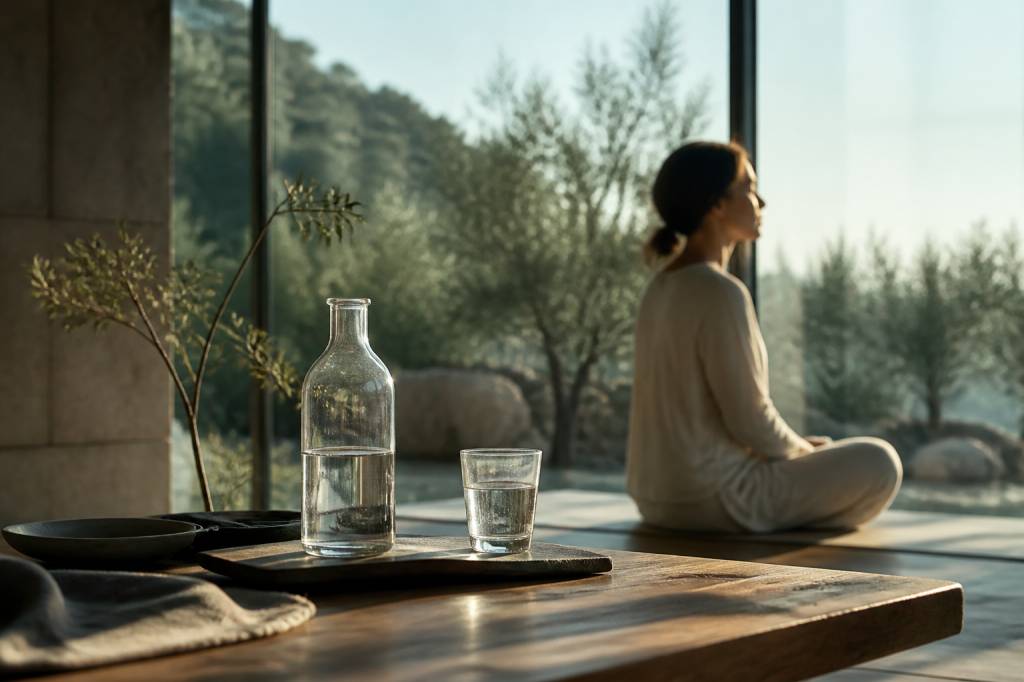
This is why successful abstinence often requires replacement, not just removal. People create new rituals: tea after dinner, a walk at sunset, sparkling water in a proper glass, a run, a book, a cooking project, an absurdly expensive non-alcoholic aperitif. The point is not purity. It is to give the nervous system another signal that says: the day has changed, and you are safe enough to stop performing.
Cravings after months: less frequent, but not extinct
By month six or seven, many people assume cravings will vanish like a bad haircut. Sometimes they do. Often they merely lose volume. They may appear in particular contexts: stress, celebration, loneliness, anger, or a familiar place where alcohol once lived in the bloodstream of memory.
The important thing is not to romanticize cravings or fear them. They are usually temporary, and they often carry information. A craving may mean thirst, hunger, fatigue, social anxiety, or the longing for a pause. The trick is to ask what the craving is actually asking for. Very often, it is not alcohol. It is relief.
Some people find that a year without alcohol changes the nature of temptation itself. They are no longer “trying not to drink” in the dramatic sense. They simply have a clearer sense of what drinking costs them. That kind of knowledge is less flashy than discipline, but more durable.
The health changes that can be measured, and the ones that cannot
Clinically, a year without alcohol can bring measurable improvements: better liver enzymes, lower blood pressure, improved sleep quality, weight loss or stabilization, and reduced risk of alcohol-related disease. For people with alcohol use disorder, the benefits can be much more profound and life-saving.
But some of the most important changes are harder to put on a chart. Waking up without dread. Remembering entire conversations. Having a clearer relationship with food, money, and time. Feeling less divided against oneself. These are not minor luxuries. They are the infrastructure of a livable life.
There is also a quiet dignity in knowing your evenings are yours again. Not leased to a bottle, not bartered for temporary relief, not handed over to a habit that always asks for more than it gives.
How to make a sober year actually workable
Good intentions are useful. Systems are better. If you are considering a year without alcohol, the most practical approach is to prepare for the situations that typically trigger drinking. A plan beats a vow, because life is not impressed by vows.
- Decide in advance how you will handle social events.
- Keep alcohol-free alternatives at home so the default is easier.
- Track sleep, mood, energy, and cravings to notice patterns.
- Tell a few trusted people so you are not carrying the experiment alone.
- Replace drinking rituals with something repeatable: exercise, cooking, reading, journaling, or evening walks.
- Be careful not to “compensate” with too much sugar, work, or caffeine if those begin to create their own problems.
If your drinking has been heavy or daily, medical guidance matters. Stopping alcohol abruptly can be dangerous for some people, and withdrawal should never be improvised like a weekend DIY project. A doctor’s advice is not a moral statement; it is a sensible one.
One year later: what tends to remain
After 12 months, many people do not simply feel “better.” They feel different. More awake, perhaps. Less negotiable with themselves. A little less interested in performing social ease at the cost of personal discomfort. Sometimes they return to alcohol in moderation; sometimes they do not. The point is that the decision is theirs, and not merely the product of habit in a costume.
A year without alcohol rarely makes life perfect. It does, however, tend to make life more legible. The body speaks more clearly. The mind becomes less fog-bound. Sleep stops behaving like a hostage negotiation. And the self, which alcohol often turns into a blurred silhouette, starts to take shape again.
In an age that sells us constant distraction in elegant packaging, that may be the most radical benefit of all: to spend a year sober and discover that the ordinary world, inconvenient and beautiful, was never actually that dull. It was simply waiting to be met without the haze.