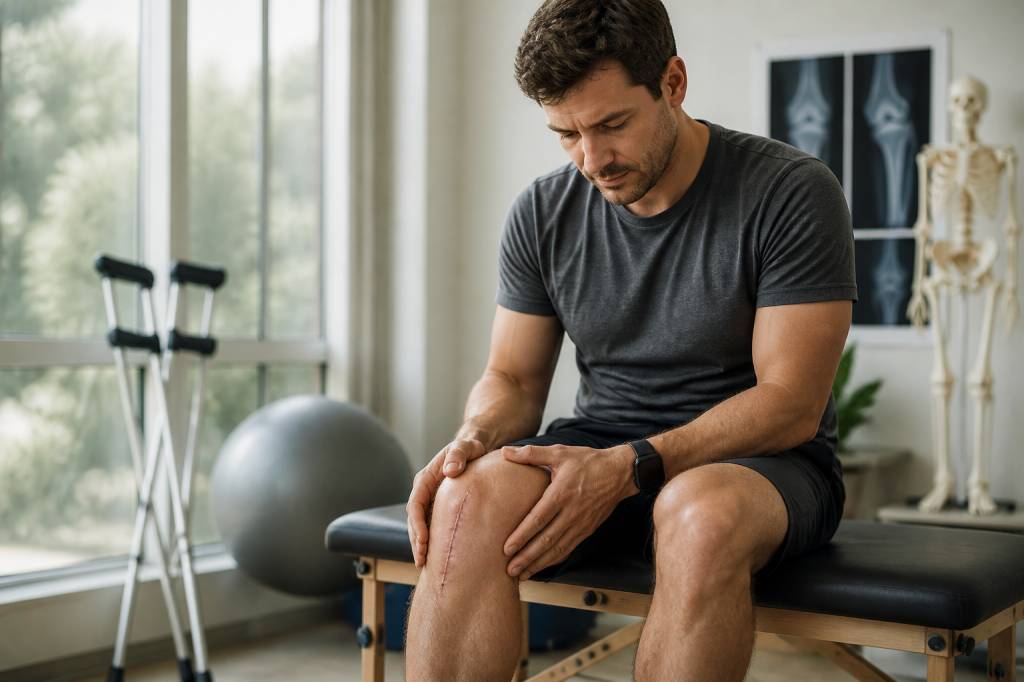
Ten years after a tibial plateau fracture, the original injury can feel like an old chapter that refuses to stay closed. The cast is long gone, the crutches may have disappeared into a loft or landfill, and yet the knee still has opinions. Stiffness on cold mornings. A dull ache after walking. A strange negotiation with stairs. Perhaps even the unsettling sensation that one leg has quietly become older than the other.
A tibial plateau fracture affects the upper surface of the shinbone, where it meets the knee joint. Because this area carries body weight and helps the knee move smoothly, the consequences can extend well beyond the initial healing period. Some people recover remarkably well. Others develop persistent pain, reduced mobility, weakness or post-traumatic arthritis years later.
Ten years on, the important question is not whether the knee is “supposed” to hurt. It is whether the symptoms have a cause that can be understood and managed. Medicine, fortunately, is less interested in heroic endurance than it once was.
What can happen a decade after the injury?
Long-term outcomes vary according to the severity of the fracture, whether the joint surface was damaged, how well the bones healed, the person’s age and activity level, and whether surgery was required. A fracture that healed in good alignment may cause few problems. A more complex injury, especially one involving cartilage damage, can leave a more complicated inheritance.
Common long-term effects include:
- Persistent or recurring knee pain, particularly during stairs, squatting or prolonged standing.
- Stiffness and a reduced range of motion.
- Weakness in the quadriceps and surrounding muscles.
- Swelling after activity.
- A feeling of instability, catching or grinding.
- Altered walking patterns, sometimes leading to hip or back discomfort.
- Post-traumatic osteoarthritis, which may develop gradually over the years.
- Irritation from plates, screws or other surgical hardware.
Some discomfort is predictable after a major joint injury. That does not mean it should be dismissed. Pain is information, not a moral examination. A person who needs to rest after a short walk is not failing at recovery; the body may simply be asking for a more precise assessment.
Why pain may persist after ten years
Several mechanisms can be responsible, and more than one may be present at the same time. Damage to the cartilage can lead to uneven pressure within the knee. If the bones healed with a slight change in alignment, the joint may carry weight differently. Muscles that became weak during immobilisation may never have fully regained their former strength. Scar tissue can restrict movement, while irritated nerves may create burning, tingling or sensitivity.
Post-traumatic arthritis is one of the most common explanations for gradually increasing pain. Unlike the familiar image of arthritis as simply “wear and tear”, post-traumatic arthritis often reflects the combined effects of the original injury, cartilage damage, altered joint mechanics and years of loading. The knee, with its unglamorous devotion to gravity, keeps a meticulous account.
Hardware can also play a role. Plates and screws are usually left in place unless they cause a specific problem. In some people, they irritate nearby soft tissue, particularly when kneeling or when the metal sits close beneath the skin. Removing hardware is not automatically beneficial and involves its own risks, so the decision requires an orthopaedic assessment rather than a wishful operation.
When a medical review is worth arranging
A new or worsening problem ten years after a fracture deserves attention, especially if it interferes with sleep, work, exercise or ordinary independence. A GP, physiotherapist, pain specialist or orthopaedic surgeon can help identify whether the issue is mechanical, inflammatory, muscular, neurological or a mixture of these.
Seek urgent medical advice if knee pain is accompanied by a hot, red and markedly swollen joint, fever, sudden inability to bear weight, a new deformity, severe calf swelling, chest pain or breathlessness. These symptoms may indicate infection, a serious joint problem or a blood clot, and they should not be placed on the waiting list of life’s minor inconveniences.
For a routine assessment, clinicians may ask:
- Where exactly is the pain, and what does it feel like?
- Does it occur with movement, at rest or at night?
- How far can you walk before symptoms begin?
- Can you use stairs, kneel, cycle or stand from a chair?
- Has the knee locked, given way or visibly swollen?
- What treatment and rehabilitation did you receive after the fracture?
- Are there other health conditions or medications affecting pain and mobility?
Investigations may include weight-bearing X-rays to assess alignment and arthritis. In selected cases, an MRI can examine cartilage, ligaments and soft tissues, while a CT scan may provide a clearer view of bone structure or complex alignment. The most sophisticated scan is still only useful when paired with a careful history and physical examination.
Building a sensible pain-management plan
Long-term pain management works best as a layered strategy rather than a single miracle treatment. The aim is not always to create a completely silent knee; it is to improve function, sleep, confidence and quality of life while reducing unnecessary risk.
Physiotherapy is often central. A programme may focus on quadriceps strength, hip stability, balance, calf flexibility and controlled knee movement. Stronger muscles can reduce the load placed directly on the joint and improve walking mechanics. Progress should be gradual. The ancient human tendency to do too much on the first good day remains one of rehabilitation’s most reliable villains.
Low-impact exercise is generally kinder to a damaged knee than repeated jumping or hard running. Options may include:
- Cycling, using a comfortable resistance and suitable saddle height.
- Swimming or water-based exercise, if the joint tolerates it.
- Walking on even ground, increased in small increments.
- Elliptical training, where appropriate.
- Strength exercises prescribed by a physiotherapist.
- Balance and mobility work to reduce fear of movement.
Weight management may also help when relevant. Even modest weight loss can reduce the forces passing through the knee during everyday activities. This is not an invitation to moralise about bodies. It is a biomechanical fact, and it should be discussed with compassion rather than the usual cultural drumbeat of shame.
Medication options depend on personal health circumstances. Paracetamol may help some people, while anti-inflammatory medicines can be useful for selected patients but may be unsuitable with kidney disease, stomach ulcers, cardiovascular problems or certain medications. Topical anti-inflammatory gels can offer relief with less whole-body exposure, although they are not risk-free. A pharmacist or clinician can advise on appropriate use.
Persistent pain may also benefit from pain-management services, particularly when the nervous system has become unusually sensitive after years of injury. Approaches can include education, pacing, psychological support, sleep improvement and carefully selected medicines for nerve-related pain. This does not mean the pain is imaginary. It means pain is produced by a living nervous system, not by a knee acting alone in a courtroom.
Mobility aids are tools, not defeats
Many people resist walking aids because they associate them with decline. In reality, a properly fitted aid can preserve independence and make movement safer. A stick held in the hand opposite the affected leg may reduce load and improve balance. A walking frame or rollator can be useful during flare-ups or longer outings. A brace may help with instability in selected cases, although it should not replace muscular rehabilitation or a proper diagnosis.
Footwear matters more than its glamour quotient suggests. Supportive shoes with good cushioning and a stable sole may make walking more comfortable. Some people benefit from orthotics, particularly when alignment through the foot and ankle affects the knee. These should be assessed individually; internet-purchased correction devices are not always the benevolent little engineers they claim to be.
At home, practical adjustments can prevent unnecessary strain:
- Use handrails on stairs and keep frequently used items within easy reach.
- Consider a raised chair or toilet seat if standing is difficult.
- Use a shower seat or grab rails where balance is uncertain.
- Plan rest points during longer journeys.
- Alternate activity with recovery rather than waiting for a severe flare-up.
Injections and surgical options
Injections may be discussed when exercise, pacing and medication are not enough. Corticosteroid injections can offer short-term relief for some people, particularly during an inflammatory flare, although repeated injections require careful consideration. Hyaluronic acid and platelet-rich plasma are sometimes offered, but evidence varies and access differs between health systems. A clinician should explain likely benefits, uncertainties and costs without turning hope into a sales strategy.
If pain and disability become substantial, an orthopaedic surgeon may discuss surgery. Options depend on the pattern of damage and may include arthroscopy in limited situations, corrective osteotomy when alignment is a major factor, partial knee replacement or total knee replacement. A knee replacement is not a punishment for having aged, nor is it an automatic destination after a fracture. It is considered when symptoms, imaging and loss of function align, and when non-surgical measures no longer provide a reasonable quality of life.
Before surgery, it is useful to understand recovery demands, possible complications, expected improvements and the lifespan of an implant. A second opinion can be sensible, especially when the proposed procedure is major or the diagnosis remains uncertain.
Living well with a changed knee
Recovery after a tibial plateau fracture is rarely a straight line. At ten years, the goal may no longer be returning to the exact knee you had before the accident. It may be walking around a city without planning every bench, playing with a grandchild, returning to gardening, or sleeping without a negotiation at two in the morning. These are not small ambitions. They are measurements of a life reclaimed.
Keeping a brief symptom diary can reveal patterns: which activities trigger pain, how long swelling lasts, whether sleep changes symptoms, and what actually helps. Pace demanding tasks, build strength consistently and treat flare-ups early rather than swinging between total rest and heroic overexertion.
Most importantly, persistent symptoms deserve a human conversation with a qualified professional. Ten years is not too late to investigate pain, improve mobility or revisit treatment. Bones may remember the accident, but they are not the only authors of the future. With the right assessment and a practical plan, a knee can become less of a sentence and more of a sentence with commas: interrupted, perhaps, but still moving forward.